
Playground Basketball Demigod Build Setup and Archetypes
Playground Basketball demigod build setups combine elite finishing and lockdown defense across versatile frames. The standard configuration uses a 6'8 small forward at minimum weight, pairing a 99 driving dunk with Hall of Fame clamps to control both sides of the court.
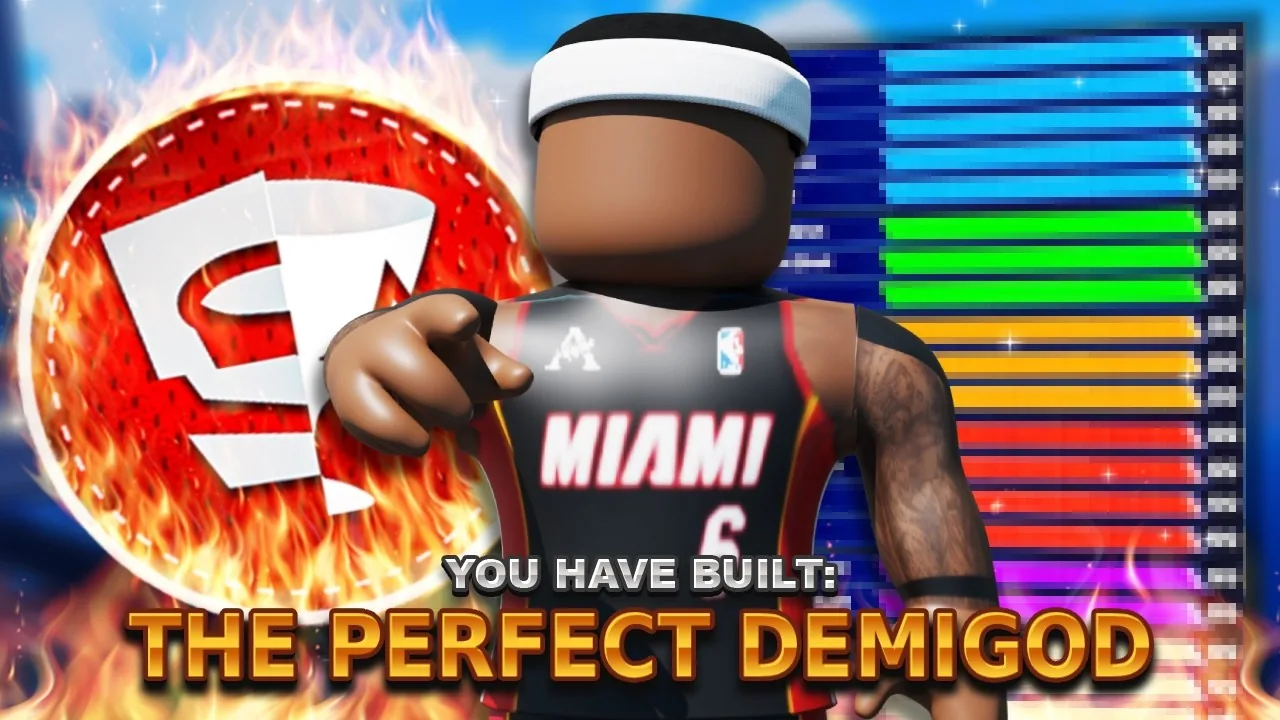
Playground Basketball demigod build setups combine elite finishing and lockdown defense across versatile frames. The standard configuration uses a 6'8 small forward at minimum weight, pairing a 99 driving dunk with Hall of Fame clamps to control both sides of the court.
Players in the park seek configurations capable of scoring at the rim, defending opposing ball handlers, and maintaining mobility. While specialized archetypes excel in single categories, balanced setups function effectively across 1v1, 2v2, and 3v3 courts.
Core Archetypes for Demigod Setups
The most established demigod setups combine the Slashing primary archetype with the Defending secondary archetype. This blend grants high-tier athletic attributes and defensive disruption without sacrificing paint scoring. Wing builds made this way can sprint in transition and contest smaller guards.
Another variation places Defender as the primary archetype and Slashing as the secondary. This prioritizes perimeter defense, lateral quickness, and high steal ratings while maintaining an 80+ driving dunk and solid mid-range consistency. Guard-oriented creators often compare this to an all-around wing package.
Playmaking archetypes also provide high-utility demigod alternatives. A 6'7 shooting guard with pure playmaking access unlocks Hall of Fame playmaking badges, allowing long-distance dribble sequences and step-backs against tight coverage. For players who prefer pure floor spacing, a tall stretch build provides deep shooting range while retaining interior height.
Wing Finisher 6'8 Demigod Template
The 6'8 Small Forward configuration remains the standard template for demigod builds. Built at the lowest possible body weight, this setup preserves sprint speed while reaching maximum finishing potential.
This frame achieves a 99 driving dunk attribute, making it effective for players learning how to dunk through contact animations and self-lobs. On defense, it gains access to Hall of Fame Clamps, allowing physical bumps that halt opposing ball handlers at the perimeter.
While the listed three-point rating sits at 53, players who time their jump shot meter can still connect on open looks and mid-range pull-ups. For signature packages, pairing Pro standing crossovers with the Young escape move provides enough separation to initiate drives or reset the offense.
Recommended takeovers for the 6'8 frame include Lane Splitter paired with Perimeter Guardian. This combination boosts offensive straight-line burst when driving past defenders while reinforcing lateral contests on perimeter stops.
Compact Guard and Heavy Wing Variants
Players seeking alternative physical profiles have two prominent options: a heavier 6'5 wing or a balanced 6'4 guard.
The 6'5 Small Forward variant uses a 220-pound frame with Slashing primary and Defending secondary. This setup trades a fraction of pure height for silver dribbling badges, Hall of Fame Elusive Finisher, and Hall of Fame Green Machine. Gold defensive badges remain intact, providing physical strength on drives without giving up lateral positioning.
The 6'4 Shooting Guard variant operates at 165 pounds with Defender primary and Slashing secondary. In game creator testing, this setup reaches an 89 driving layup, 82 driving dunk, 80 mid-range, 93 perimeter defense, 83 steal, and 94 speed. It acts as an agile lock capable of pushing through smaller point guards while hitting pull-up jumpers inside the arc.
Badge progression requires playing park matches to meet specific badge requirements and level up tiers from bronze to Hall of Fame. Grinding games on 1v1 or 2v2 spots steadily raises badge levels and physical thresholds.
Comparing Demigod Build Attributes and Takeovers
Selecting an archetype depends on whether you run solo on the 1v1 court or team up for 2v2 and 3v3 games. The table below details tested configurations, their primary role, and the attribute trade-offs involved.
| Build Template | Best For | Trade-Off |
|---|---|---|
| 6'8 SF Slashing / Defending | 1v1 streaks and rim finishing | Low three-point rating requires strict jump shot timing |
| 6'5 SF Heavyweight Slasher (220 lbs) | Physical driving and gold paint stops | Slightly reduced perimeter lateral speed |
| 6'4 SG Defender / Slashing (165 lbs) | Fast perimeter lockdown and mid-range pull-ups | Lower interior contest height against tall centers |
| 6'7 SG Pure Playmaker | Dribble combos, ISO play, and step-back creation | Zero finishing badge points allocated |
| 7'2 Center True Stretch | Half-court spacing and spot-up shooting | Low driving dunk and reduced ball handle |
Each option fulfills the role of an all-around template within its positional group. Players looking for the single best build across all park modes generally choose the 6'8 frame due to its high driving dunk rating and defensive reach.
Defensive Execution and Scoring Strategies
Operating a demigod frame requires active positioning rather than spamming steal attempts. Reaching fouls interrupt defensive sequences, so staying directly in front of the ball handler and using body bumps forces pick-ups and shot clock violations.
On offense, setups with lower three-point ratings benefit from taking mid-range jumpers or attacking open driving lanes. Pairing a hesitation or behind-the-back move into a direct rim run creates high-percentage dunk opportunities. When opposing defenders drop back to prevent drives, pull up for uncontested mid-range shots to keep coverage honest.
Self-lobs offer an additional scoring method on high-dunk builds. Double-tapping the lob button while driving toward the basket launches an aerial finish that bypasses grounded rim protectors, providing reliable offense on both isolation and secondary possessions.
Related Guides
Ja Morant Build
Recreate the Ja Morant point guard build in Playground Basketball with exact physical metrics, top attributes, and selected takeovers.
Kobe Build
Configure physical measurements, shooting archetypes, and coin investments to recreate Kobe Bryant's perimeter playstyle on the playground court.